

A few days ago, after a conversation about the war and the children caught in it, I remembered a line I first heard as a teenager.
“Children? You mean someone is killing children? Go!”
It’s from Karel Čapek’s play Mother.
Dolores, a woman who has lost her husband and four sons to war, finally relents and allows her only remaining son to enlist — to protect the most vulnerable.
Someone is killing children.
In every corner of the world, every minute of every day, a child is harmed at the hand of one of us grown-up mothers and fathers.
Yesterday it was a school.
Last week it was a neighborhood street.
Tomorrow it will be somewhere else.
So where do I go? What should I do?
Some time ago, I posted a photograph of a small boy lying face down in the sand.A friend warned me: “Be careful. If you post a picture of a dead foreign child, you should post a photo of a dead child of your people as well.”
I must balance an image of a victim from the Other clan with an image of my clan.
Otherwise, I could be seen as the enemy of my people.
To post an image of a child’s lifeless body is not enough.
It could be misleading.
I might be leaving out the justification for the murder of that particular child.
I might be withholding the perfectly logical, explicable reason for his death.
I might be omitting the story of the violent actions of members of the Other Clan which incited his murder.
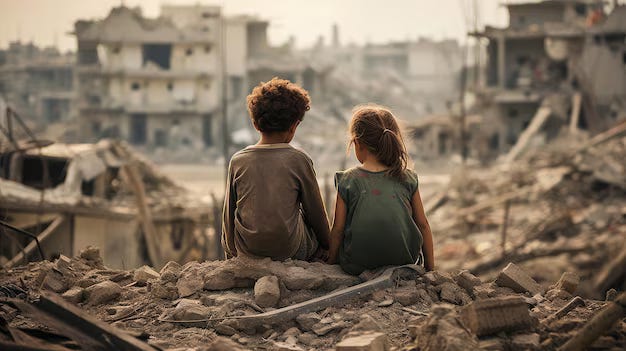
War is messy.
It’s a mess, I’m told, one that inevitably involves the death of children.
That’s just the way it is.
But what if we viewed all the photographs of the dead as images in our family album — a family in which the mothers and fathers are failing to protect the children they claim to cherish more than anything in the world?
What if there really is no Other? What if it’s just us? Which direction do we aim the missiles then?
What story about “the Other” are we willing to believe?
And what would change — if we refused that story?
What if history isn’t asking us to choose a side? What if it’s asking us to become the the adults, the parents we claim to be?
Would our capacity to mourn protect us from collapsing into silence and passivity?
How about you, friends? I’d love to hear what this brings up for you.
What helps you stay human in a world that sometimes feels unbearably harsh?
Thank you, Julia. I do believe it is our capacity to mourn – to grieve is what is at the center. And let's not forget that the other side of grief is gratitude. The grief/gratitude paradigm represents two profound sides of love. To abide here in grief and gratitude serves to increase our capacity to bear suffering – the suffering that is ours as well as the world's. We live in a culture where our capacity to grieve has atrophied. We have little capacity for grieving our own pain not to mention enduring the profound grief that awaits deep within our hearts for the pain we've inflicted on others including our children.
Thank you for this, Julia and for the work you do in the world. Before our infertility journey and the work we’ve done with you, I think I was pretty numb. Not just about the violence happening out there but the violence happening inside me. To answer your question, that’s what keeps me human, being a dad and everything I learned on the way here, and everything my daughter is teaching me every day.