

A couple of months ago, the New York Times published a Tiny Love Story I wrote about my father.
It was less than a hundred words about a moment from my childhood when, as a six-year-old girl, I tried to help my father contain his volcanic rages. I also wrote about what he had endured—a labor camp, the loss of his beloved mother and sister, imprisonment without trial.
To me, it was a love story. A small tribute to my Apu (pronounced AH-poo)—the Hungarian word for father—and to the complicated, wounded, poetry-loving man I both adored and often fought with.
Excited, I sent the link to my extended family. Half responded with cheers. The other half were silent. Since ordinarily we do acknowledge each other’s emails, I knew something was up.
“Silent treatment.” It’s an odd expression. A treatment is usually intended to heal. What are we trying to communicate when we withdraw our voices from people we love?
I’m angry? You hurt me? You disappointed me? You should know what you did?
Or perhaps: Until you understand what you’ve done, I am withholding myself from you.
Or maybe just: I need time to sit with this before I’m able to talk to you.
Whatever the intention, silence leaves the other person to fill in the blanks.
And I filled them in.
I was hurt. I felt unseen and misunderstood. And for a while, I did what we humans so easily do when we’re hurt. I told myself a story in which I was right and they were wrong.
After a few weeks of tending to my Orphans—the word I use in my work for the hurting, frightened, angry places in us—I reached out to some of the people I’d been closest to.
Not because I had arrived at some noble state of compassion. Part of me wanted to defend myself. But I also needed to connect, to know how they felt. What it was I did wrong in their eyes.
So I called. And they answered. It wasn’t easy. Not for them to speak their truth, not for me to hear it.
Some felt I had betrayed my father by writing publicly about his rages. Some were upset by the photograph accompanying the piece. His tie was askew. His trousers were wrinkled. Others said that if they had wrestled with rage, they wouldn’t want the world to know they had needed help managing it.
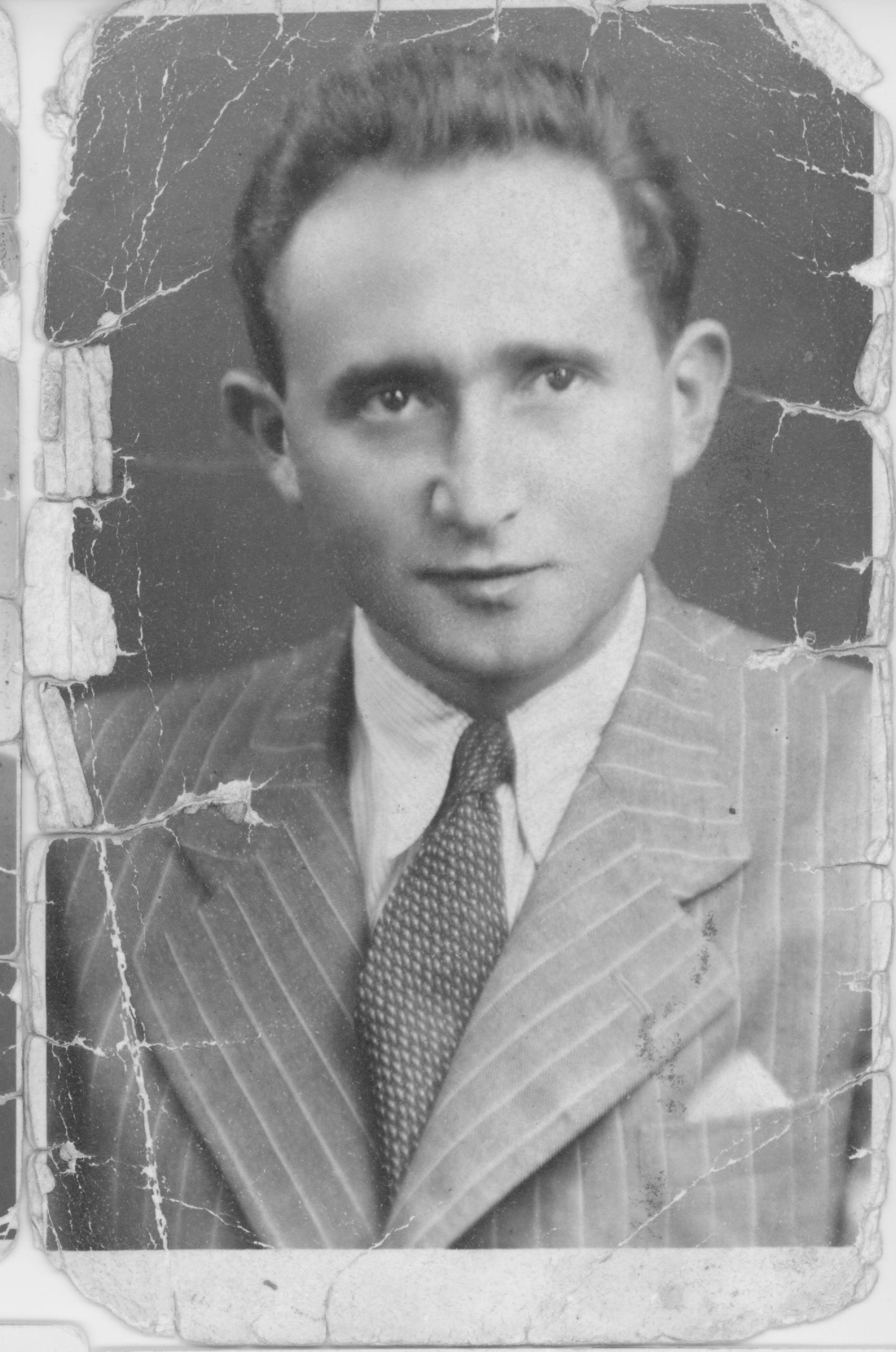
I listened. I explained. We disagreed. But we kept talking.
Afterward, I began to wonder what it might actually have felt like to be them. I imagined opening the New York Times and seeing someone I loved introduced with the words:
“After my father’s rages...”
Perhaps the rest of the piece became almost impossible to take in.
Perhaps instead of seeing what I saw in the photograph—a rare, intimate moment between a father and his small daughter, neither of us posing—they saw an undignified image of a man they loved.
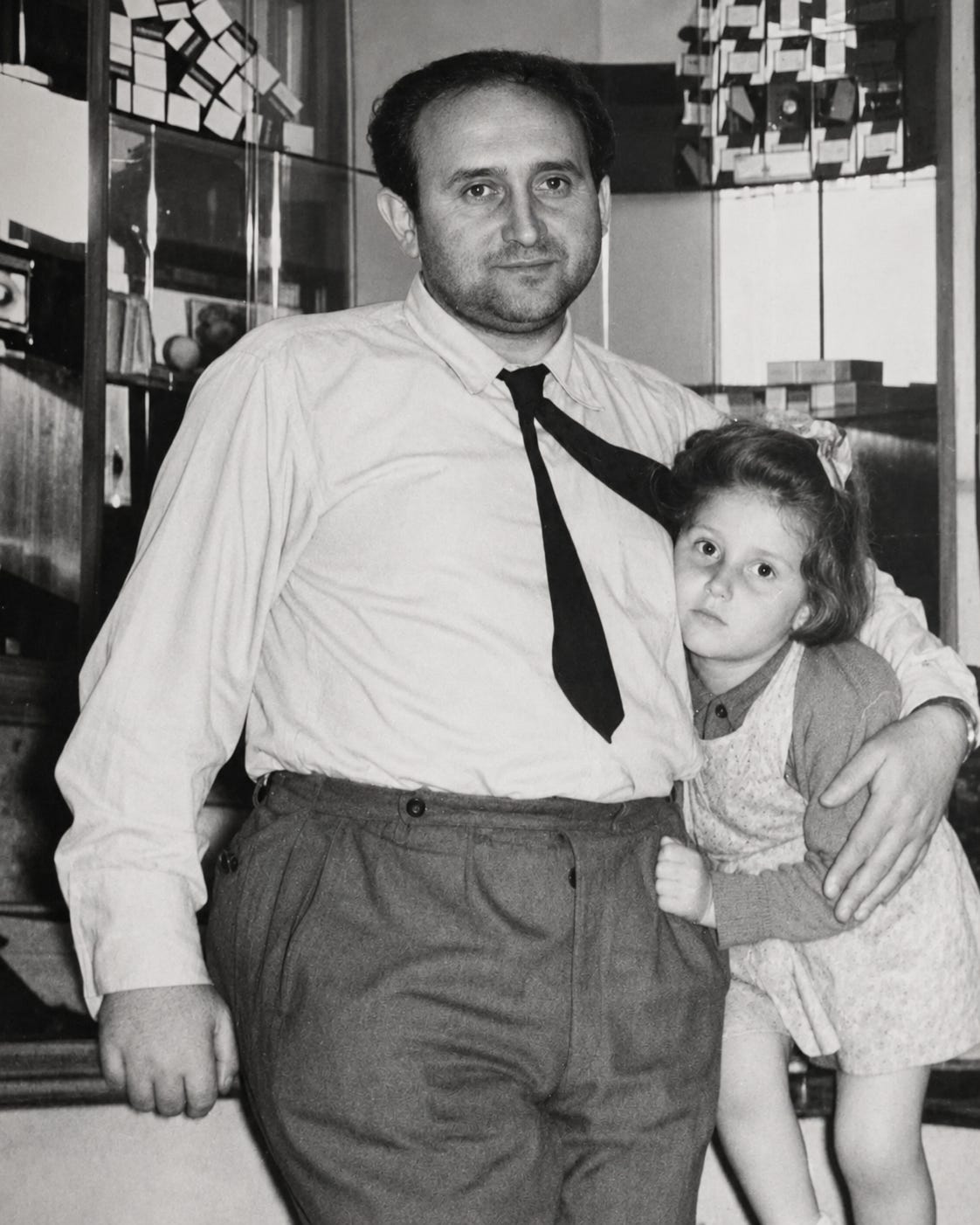
His tie is crooked. He looks unshaven. What will people think of him? What will they think of us?
Something changed when I began to do that. Something. Not everything.
It still hurts. A lot. It still hurts to realize that people you’ve known for decades, loved and cared for when they needed you—and vice versa—can within minutes create you in their own image—and withhold the love you thought would always be there.
I still wish that my extended family could have celebrated that tiny win of the Tiny Love Story. I wish they could’ve seen what I saw: A glimpse of a child trying to help a parent carry pain that was far too large for either of them.
Was it shameful for a man who endured a labor camp, devastating losses and imprisonment without trial to need help carrying his grief?
I don’t think so. I think it makes him human.
Some family members said my father would never have wanted to be represented that way.
Maybe.
Years ago, in my first book, Inconceivable, I also wrote about my father’s rages in the context of what he had suffered. He read those pages. And then he proudly showed the book to everyone he knew.
My guess is that my Apu would have carried that New York Times clipping to his chess club and shown it to anyone willing to look.
Would he have? I can’t know.
I can’t completely know what someone might feel when they read my story. I can’t know what old wound or fear or loyalty it might touch. I can only tell them what I meant. They can tell me what they felt.
And somewhere between those two things, perhaps there’s a little more room for both of us.
I love and care deeply about the people in this story, and don’t ever intend to write anything malicious about any of them. But writing is one of the ways I attempt to show up in my life. It’s how I inch closer to who I want to be. Speak truths that keep wanting to be spoken.
Perhaps, for one reason or another, friends, family, people I love will be hurt by something I write. If that happens, I hope we’ll be willing, when we’re able, to find our way back into conversation.
Because the human game is a contact sport. Injury is pretty much a given. We’ll disappoint each other. Misunderstand each other’s actions. Fail to live up to each other’s expectations.
Sometimes we’ll need to step away. I know I do. This isn’t a plea to keep talking when we need distance. As long as we can leave a little room for the possibility that the person on the other side of the hurt has a story too. That both our stories might need to be heard, really heard, if our aim is to use the rift in support of each other’s healing.
Conversation:
Is there someone you love whom you need distance from right now? How do you hold that distance without turning them into the villain of the story?
Have you ever been certain you understood why someone hurt you, only to learn that their version of what happened was very different?
What has helped you find your way back to someone you love after you’ve hurt each other?
Have you ever reached out after a long silence? What made you finally do it?
Hi Julia. I really appreciated reading this because it closely reflects an experience I am currently going through. After losing a pregnancy and sitting with that grief, I decided to write my dad a letter, something I hadn't done in over ten years. The letter was meant to share my truth and my memories of our relationship, the hurt and the love. I didn’t expect a response; I just wanted to express myself. Less than a week later, my father replied. His letter helped me see and understand his perspective on our distance, which I had assumed and was not entirely accurate. When I received his letter, I cried deeply, not out of pain, but out of relief and regret for the time lost. I felt the anger inside me soften, and I could begin to love my father again, something I did not know I really wanted to connect to.
This piece reminds me of some difficult times my husband and I had with each other. Using some suggestions from some television marriage counselors we developed a way to communicate. There would be no extra conversation other than the agreed upon structure. There were 2 people communicating - my husband and me. I will call my husband person 1 and me person 2. Lets say person1 begins the conversation about the difficult topic. They get 5 minutes to express their thoughts without being verbally abusive to the other. They can say I statements like when you ________ it made me feel ___________. They can discuss the topic but not doing blaming or disrespectful comments. Person 2 paraphrases person 1. If person 1 needs to correct person 2's paraphrasing they do that next. Then person 2 tells person 1 "that makes sense". Then the roles reverse. This process continues until person 1 and 2 decide to end the structured conversation.